Clinical Decision-Making and Off-Label Use of Antipsychotics
Off-label prescription is a right of the individual practitioner, a phenomenon that is widespread in medicine and is necessary to allow us to care for patients to the best of our ability. With that right, however, comes the responsibility to do so with care and a thorough understanding of what evidence is available to guide our clinical choices.
Off-label use of medication is endemic in some clinical populations. For example, few drugs have undergone the testing required to secure a specific pediatric indication, forcing clinicians to make off-label choices to treat many conditions in young patients. In other cases, the absence of any specific medication approved for a given illness compels us to use existing drugs in innovative ways or apply them to conditions for which they may not originally have been intended. In this case, the greatest injustice to our patients is not that the drugs are used off-label but that potentially beneficial uses have been allowed to go unstudied. Clinical demands have outstripped empiric data. Off-label use is an indicator of our need to pursue more thorough, credible, externally validated research to help clinicians make better choices.
In this article, we will comment briefly on the evidence base surrounding off-label use of antipsychotic medications and review the rationale and process for responsible off label prescription.
Extrapolating from this evidence base, researchers have evaluated risperidone as a treatment strategy for agitation, anxiety, and other symptoms in adults with ASDs, and have evaluated other antipsychotics as potential treatments for aggression in pediatric populations with disruptive and aggressive behavior not complicated by comorbid conditions other than ADHD.
Experience with other atypical antipsychotics in the treatment of symptoms related to ASDs is mostly preliminary. An 8-week randomized, double-blind, placebo-controlled trial showed improvement on the Clinical Global Improvement – Impressions scale among 11 children with autism, Asperger's disorder, or pervasive developmental disorder treated with olanzapine.[3] Data for aripiprazole include a recent randomized, double-blind, placebo-controlled trial with 218 children and adolescents age 6-17 years with a diagnosis of autistic disorder and aggressive or irritable behaviors. The 4-arm study compared placebo and 3 dosages of aripiprazole (5, 10, and 15 mg/d); at 8 weeks, all 3 medication doses showed a significant improvement in caregiver-rated irritability.[4] Open-label studies and case series have investigated quetiapine and ziprasidone as well for aggression and irritability associated with ASD. A few studies have considered the same clinical premise in adults with ASD. McDougle and colleagues[5] conducted a randomized, double-blind, placebo-controlled trial of risperidone in 31 adults with autistic disorder or pervasive developmental disorder not otherwise specified. In the 12-week study, 57% of patients in the risperidone group were categorized as responders, with reductions in repetitive behavior, anxiety, and other symptoms. No placebo recipients were categorized as responders. No changes in social behavior or language were recorded.[5]
When lack of approved treatments forces clinicians to extrapolate, it makes sense to follow the literature base, looking for population studies whenever possible.
In considering possible off-label therapy, it is important to review all relevant trials, including those with negative or inconclusive results. In a study of 46 patients with OCD who did not respond to 12 weeks of SSRI monotherapy and 1 year of cognitive-behavioral therapy, researchers found that augmentation with olanzapine, quetiapine, or risperidone did not reduce symptoms in the resistant population to the levels achieved with SSRI monotherapy in initial responders. The authors concluded that the modest gains did not support long-term use of atypical antipsychotics in the face of side effect considerations.[14]
A randomized, double-blind, placebo-controlled trial of aripiprazole in 52 patients revealed significant improvement in most measures of borderline personality disorder when administered both as monotherapy[30,31] and as add-on to sertraline.[32] According to Nickel and coworkers, however, self-injury continued during treatment.[30] Quetiapine and risperidone also have been studied in open-label trials.
Most of the research has been done with olanzapine in adolescents and adults, with some small studies or case reviews for quetiapine. The limited literature shows largely positive results, including significant increases in body mass index and improvement in total eating disorder inventory scores.[33] Mondraty and colleagues[34] specifically noted a significant reduction in intrusive anorectic ruminations among 8 patients treated with olanzapine but not in 7 treated with chlorpromazine. Similarly, Bissada and colleagues[35] reported a significant reduction in obsessive symptoms of anorexia nervosa, as well as an increase in weight and earlier achievement of target body mass index, among olanzapine-treated women compared with placebo.
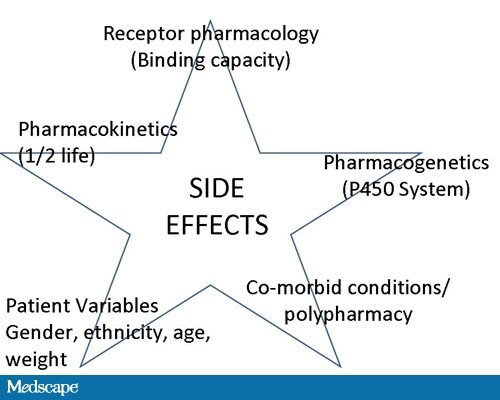
If a strong research case doesn't exist for or against the off-label use, the clinician must then consider the pharmacology, pathophysiology, and target symptoms, and the literature base supporting or countering the medication selection for each. Second-line literature might include open-label or retrospective studies or case series that might shed some light on how the drug will perform for the patient's given set of circumstances, but these articles are far less reliable than a controlled trial. The side effect profiles of antipsychotics are a serious consideration in any decision to use them for treatment, on- or off-label, and must be weighed against any potential benefits.
Evidence for potential effectiveness also must be weighed against the particular patient's characteristics. Drugs that are effective in adults may not work in children or adolescents, and in general the side effect risks are greater in youths. Young patients also aren't a single category: There is a substantial difference between an adolescent and an adult, and an even greater one between a patient who is 8 and one who is 14.
In summary, doctors cannot be absolutely limited by the definitive existing scientific knowledge base in medicine. The ability to use medications off-label is a clinician's right and responsibility in the course of providing the best possible care for his or her patients. However, the decision to do so must be a deliberate, thoughtful, and justifiable one, and it is never a cavalier choice. Consistent adherence to the literature and to logic is the best strategy for finding effective treatment and keeping patients from unnecessary risk.
This activity is supported by an independent educational grant from Bristol-Myers Squibb.
All other healthcare professionals completing continuing education credit for this activity will be issued a certificate of participation.
Physicians should only claim credit commensurate with the extent of their participation in the activity.
Medscape, LLC designates this educational activity for a maximum of 1.0 AMA PRA Category 1 Credit(s)™ . Physicians should only claim credit commensurate with the extent of their participation in the activity.
Medscape, LLC staff have disclosed that they have no relevant financial relationships.
Contact This Provider
For questions regarding the content of this activity, contact the accredited provider for this CME/CE activity noted above. For technical assistance, contact CME@medscape.net
This activity is designed to be completed within the time designated on the title page; physicians should claim only those credits that reflect the time actually spent in the activity. To successfully earn credit, participants must complete the activity online during the valid credit period that is noted on the title page.
Follow these steps to earn CME/CE credit*:
*The credit that you receive is based on your user profile.
Off-label use of medication is endemic in some clinical populations. For example, few drugs have undergone the testing required to secure a specific pediatric indication, forcing clinicians to make off-label choices to treat many conditions in young patients. In other cases, the absence of any specific medication approved for a given illness compels us to use existing drugs in innovative ways or apply them to conditions for which they may not originally have been intended. In this case, the greatest injustice to our patients is not that the drugs are used off-label but that potentially beneficial uses have been allowed to go unstudied. Clinical demands have outstripped empiric data. Off-label use is an indicator of our need to pursue more thorough, credible, externally validated research to help clinicians make better choices.
In this article, we will comment briefly on the evidence base surrounding off-label use of antipsychotic medications and review the rationale and process for responsible off label prescription.
Establishing a Rationale for Use
Whenever possible, treatment should begin with on-label uses for medication. For example, currently the US Food and Drug Administration (FDA) has approved only the following for pediatric use:- Risperidone and aripiprazole for youths with schizophrenia, age 13 years and older;
- Risperidone and aripiprazole for bipolar I disorder, mania or mixed episodes, in youths age 10 years and older; and
- Risperidone for irritability associated with autistic disorder in youths age 5-16 years.
Autism and Other Pervasive Development Disorders
Autism spectrum disorders are a good example of this logic path. Risperidone received approval specifically for irritability associated with autism spectrum disorders (ASDs) in children and adolescents age 5-16 years. (There is no indication for any pharmacologic treatment to address the core social functioning symptoms of ASD.) Randomized controlled trials (RCTs) have reported positive outcomes with risperidone in mitigating maladaptive behaviors in children and adolescents with ASDs. In several RCTs, short-term risperidone treatment improved the restricted, repetitive, and stereotyped behavior of ASDs, a benefit maintained with long-term (up to 6 months) treatment. For example, McCracken and colleagues[1] compared risperidone with placebo in 101 children with autism accompanied by tantrums, aggression, or self-injurious behavior and found that 69% of patients in the risperidone group showed a significant (25% or more) improvement in irritability, the primary outcome measure, compared with 14% of patients taking placebo. Shea and colleagues[2] found that risperidone significantly reduced irritability in patients with pervasive development disorders compared with placebo in a study with 79 patients.Extrapolating from this evidence base, researchers have evaluated risperidone as a treatment strategy for agitation, anxiety, and other symptoms in adults with ASDs, and have evaluated other antipsychotics as potential treatments for aggression in pediatric populations with disruptive and aggressive behavior not complicated by comorbid conditions other than ADHD.
Experience with other atypical antipsychotics in the treatment of symptoms related to ASDs is mostly preliminary. An 8-week randomized, double-blind, placebo-controlled trial showed improvement on the Clinical Global Improvement – Impressions scale among 11 children with autism, Asperger's disorder, or pervasive developmental disorder treated with olanzapine.[3] Data for aripiprazole include a recent randomized, double-blind, placebo-controlled trial with 218 children and adolescents age 6-17 years with a diagnosis of autistic disorder and aggressive or irritable behaviors. The 4-arm study compared placebo and 3 dosages of aripiprazole (5, 10, and 15 mg/d); at 8 weeks, all 3 medication doses showed a significant improvement in caregiver-rated irritability.[4] Open-label studies and case series have investigated quetiapine and ziprasidone as well for aggression and irritability associated with ASD. A few studies have considered the same clinical premise in adults with ASD. McDougle and colleagues[5] conducted a randomized, double-blind, placebo-controlled trial of risperidone in 31 adults with autistic disorder or pervasive developmental disorder not otherwise specified. In the 12-week study, 57% of patients in the risperidone group were categorized as responders, with reductions in repetitive behavior, anxiety, and other symptoms. No placebo recipients were categorized as responders. No changes in social behavior or language were recorded.[5]
When lack of approved treatments forces clinicians to extrapolate, it makes sense to follow the literature base, looking for population studies whenever possible.
Considering Disease Classification and Therapeutic Effect
Clinicians must exercise care in applying the evidence surrounding treatment for one psychiatric condition to another, even within the same group of disorders. For example, evidence of treatment efficacy across anxiety disorders varies widely.Generalized Anxiety Disorder
The FDA did not approve an indication for generalized anxiety disorder (GAD) for quetiapine (or any other antipsychotic drug) because of concerns about safety in that patient population. The largest study with quetiapine, a multisite, double-blind RCT of placebo and paroxetine with 873 patients, found similar rates of remission for both a higher dose of quetiapine (150 mg/day vs 50 mg/day) and paroxetine compared with placebo, as well as evidence of earlier treatment response.[6] Most studies in GAD have been smaller open-label trials or case series, however. Pollack and colleagues[7] noted that augmentation with olanzapine was more likely than placebo to reduce symptoms of GAD in patients who did not have remission with fluoxetine alone. However, the authors cautioned that the risk for weight gain and other side effects must be carefully considered against any potential benefit -- a warning that is relevant to all circumstances in which antipsychotics might be used.[7]Posttraumatic Stress Disorder
Most studies related to posttraumatic stress disorder (PTSD) are small. In 19 patients with combat-related PTSD who did not respond to treatment with selective serotonin reuptake inhibitors (SSRIs), a double-blinded, placebo-controlled trial with olanzapine found statistically significant improvement in individual symptoms, such as sleep and anxiety, but not in overall clinician-rated global response rates.[8] Risperidone augmentation also improved symptoms of PTSD compared with placebo in 73 veterans treated in a residential facility for 5 weeks followed by 11 weeks of outpatient therapy.[9] However, the effectiveness of antipsychotic drugs in PTSD has been neither convincingly nor consistently demonstrated.Obsessive-Compulsive Disorder
Obsessive-compulsive disorder (OCD) is considered an anxiety disorder, and in its most severe forms, it may approximate delusions -- a symptom for which antipsychotics have demonstrated efficacy. Experience was mixed with risperidone in the treatment of OCD in 2 double-blind, placebo-controlled trials.[10,11] Li and colleagues[11] reported significant reductions in Yale-Brown Obsessive Compulsive Scale (YBOCS) obsession scores with risperidone in 12 SSRI-refractory patients, although a reduction in total YBOCS score did not reach statistical significance. In contrast, haloperidol significantly reduced both scores. Erzegovesi and coworkers[10] found that risperidone augmentation in 39 patients significantly improved OCD in fluvoxamine-resistant patients but not in fluvoxamine responders.[10] Both risperidone and olanzapine add-on therapy equally improved symptoms of OCD in a 16-week, single-blind study of 96 SSRI-resistant patients. In a double-blind placebo RCT, McDougle and colleagues[13] treated 70 patients with a primary diagnosis of OCD with an SSRI for 12 weeks. The 36 patients who were nonresponders were then randomly assigned to receive augmentation with risperidone or placebo. Half of the patients in the risperidone group responded with a reduction in the YBOCS score; no patients assigned to placebo responded. Response rates did not differ among patients with and without comorbid tic disorder or schizotypal personality disorder.[13]In considering possible off-label therapy, it is important to review all relevant trials, including those with negative or inconclusive results. In a study of 46 patients with OCD who did not respond to 12 weeks of SSRI monotherapy and 1 year of cognitive-behavioral therapy, researchers found that augmentation with olanzapine, quetiapine, or risperidone did not reduce symptoms in the resistant population to the levels achieved with SSRI monotherapy in initial responders. The authors concluded that the modest gains did not support long-term use of atypical antipsychotics in the face of side effect considerations.[14]
Mechanism of Action
A guiding principle in selecting treatment is to consider the cause of the condition vs the mechanism of action of the potential therapeutic agent.Tics and Tourette's Syndrome
Dopamine receptor blockade is the rationale for the use of antipsychotic drugs in psychosis. It is also the rationale for use of antipsychotics in the treatment of Tourette's syndrome. RCTs have found similar benefit for risperidone compared with pimozide,[15,16] and preliminary, retrospective, and open-label studies of both aripiprazole and olanzapine significantly reduced motor and vocal tics and improved behavioral symptoms such as aggression and explosive outbursts in children and adolescents.[17-19]Substance Abuse
The established influence of the dopaminergic system in substance cravings and reinforcement suggests a possible role for atypical antipsychotic agents. However, their role has been substantiated only for the treatment of drug-induced psychosis,[20] and results have been resoundingly modest in controlling substance dependence. Martinotti and colleagues[21] reported that whereas aripiprazole prolonged abstinence longer than did naltrexone in a study with 75 detoxified alcohol-dependent patients, craving scores improved more with naltrexone. In a double-blind, triple crossover study of no medication, 2.5 mg of aripiprazole, or 10 mg of aripiprazole in 18 patients, active treatment significantly increased the sedative effects and reduced the euphoric effects of alcohol in a dose-dependent fashion.[22] In several small-scale reviews, quetiapine also prolonged the duration of abstinence from alcohol in recovering adults, including those with psychiatric comorbid conditions.[23,24] Results have been less positive with the use of atypical antipsychotics in other forms of substance dependence, including stimulants, cocaine, and nicotine.Making Decisions When Evidence Is Lacking
Instances in which the need to treat exceeds the evidence base is where we find the art, as opposed to the science, of medicine. Borderline personality disorder is one example: An insufficient amount of research on pharmacotherapy for the condition has been done; the best treatment available currently is dialectical behavioral therapy.[25] Clinicians are in the position of needing to do something for severely ill patients but having very little to guide them. In such cases, fairly consistent evidence of at least a modest effect on symptoms may motivate some clinicians to choose an off-label therapy.Borderline Personality Disorder
Olanzapine significantly improved outcome measures in several RCTs, with separation from placebo occurring as early as 4 weeks.[26] Olanzapine proved superior to fluoxetine in improving general symptoms of borderline personality disorder and superior to fluoxetine plus olanzapine in control of depressive symptoms, specifically.[27] When combined with dialectical behavior therapy, it significantly decreased most symptoms measured compared with placebo, including irritability, depression, and aggression as well as self-inflicted injury.[25,28] One study, however, found no difference between olanzapine and placebo on the Zanarini Rating Scale for Borderline Personality Disorder.[29]A randomized, double-blind, placebo-controlled trial of aripiprazole in 52 patients revealed significant improvement in most measures of borderline personality disorder when administered both as monotherapy[30,31] and as add-on to sertraline.[32] According to Nickel and coworkers, however, self-injury continued during treatment.[30] Quetiapine and risperidone also have been studied in open-label trials.
Anorexia
The dire need for treatment also is well-illustrated with anorexia. It is among the most lethal of psychiatric conditions, and in advanced stages eating disorder researchers report marked disturbances in thinking and emotional regulation. Some clinicians have reasoned that in those cases it may make sense to take what is otherwise an adverse effect -- the propensity of some second-generation drugs to cause weight gain -- and use it as a treatment strategy. It would not be a long-term strategy, but this is another example of using inductive logic to find a treatment solution.Most of the research has been done with olanzapine in adolescents and adults, with some small studies or case reviews for quetiapine. The limited literature shows largely positive results, including significant increases in body mass index and improvement in total eating disorder inventory scores.[33] Mondraty and colleagues[34] specifically noted a significant reduction in intrusive anorectic ruminations among 8 patients treated with olanzapine but not in 7 treated with chlorpromazine. Similarly, Bissada and colleagues[35] reported a significant reduction in obsessive symptoms of anorexia nervosa, as well as an increase in weight and earlier achievement of target body mass index, among olanzapine-treated women compared with placebo.
Guiding Principles
The simple lack of an indication doesn't mean a medication couldn't or shouldn't work; indications reflect the drug development and FDA regulatory and review and approval process and the way drugs are marketed. Use of an antipsychotic for a nonapproved indication needs to be based on a clear, logical, and compelling line of reasoning. The first step is looking at the literature, ideally to find controlled trials that consistently support this use, as opposed to less rigorous studies or simply occasional evidence in its favor.If a strong research case doesn't exist for or against the off-label use, the clinician must then consider the pharmacology, pathophysiology, and target symptoms, and the literature base supporting or countering the medication selection for each. Second-line literature might include open-label or retrospective studies or case series that might shed some light on how the drug will perform for the patient's given set of circumstances, but these articles are far less reliable than a controlled trial. The side effect profiles of antipsychotics are a serious consideration in any decision to use them for treatment, on- or off-label, and must be weighed against any potential benefits.
Evidence for potential effectiveness also must be weighed against the particular patient's characteristics. Drugs that are effective in adults may not work in children or adolescents, and in general the side effect risks are greater in youths. Young patients also aren't a single category: There is a substantial difference between an adolescent and an adult, and an even greater one between a patient who is 8 and one who is 14.
In summary, doctors cannot be absolutely limited by the definitive existing scientific knowledge base in medicine. The ability to use medications off-label is a clinician's right and responsibility in the course of providing the best possible care for his or her patients. However, the decision to do so must be a deliberate, thoughtful, and justifiable one, and it is never a cavalier choice. Consistent adherence to the literature and to logic is the best strategy for finding effective treatment and keeping patients from unnecessary risk.
This activity is supported by an independent educational grant from Bristol-Myers Squibb.
References
- McCracken JT, McGough J, Shah B, et al. Research Units on Pediatric Psychopharmacology Autism Network. Risperidone in children with autism and serious behavioral problems. N Engl J Med. 2002;347:314-321. Abstract
- Shea S, Turgay A, Carroll A, et al. Risperidone in the treatment of disruptive behavioral symptoms in children with autistic and other pervasive developmental disorders. Pediatrics. 2004;114:E634-E641. Abstract
- Hollander E, Wasserman S, Swanson EN, et al. A double-blind placebo-controlled pilot study of olanzapine in childhood/adolescent pervasive developmental disorder. J Child Adolesc Psychopharmacol. 2006;16:542-548.
- Marcus RN, Owen R, Kamen L, et al. A placebo-controlled, fixed-dose study of aripiprazole in children and adolescents with irritability associated with autistic disorder. J Am Acad Child Adolesc Psychiatry. 2009;48:1110-1119. Abstract
- McDougle CJ, Holmes JP, Carlson DC et al. A double-blind, placebo-controlled study of risperidone in adults with autistic disorder and other pervasive developmental disorders. Arch Gen Psych. 1998;55;7:633-641.
- Bandelow B, Chouinard G, Bobes J, et al. Extended-release quetiapine fumarate (quetiapine XR): a once-daily monotherapy effective in generalized anxiety disorder. Data from a randomized, double-blind, placebo- and active-controlled study. Int J Neuropsychopharmacol. 2009:1-167.
- Pollack MH, Simon NM, Zalta AK, et al. Olazapine augmentation of fluoxetine for refractory generalized anxiety disorder: a placebo-controlled study. Biol Psychiatry. 2006;59:211-215. Abstract
- Stein MB, Kline NA, Matloff JL. Adjunctive olanzapine for SSRe-resistant combat-related PTSD: a double-blind, placebo-controlled study. Am J Psychiatry. 2002;159:1777-1779. Abstract
- Bartzokis G, Lu PH, Turner J, et al. Adjunctive risperidone in the treatment of chronic combat-related posttraumatic stress disorder. Biol Psychiatry. 2005;57:474-479. Abstract
- Erzegovesi S, Guglielmo E, Siliprandi F, Bellodi L. Low-dose risperidone augmentation of fluvoxamine treatment in obsessive-compulsive disorder: a double-blind, placebo-controlled study. Eur Neuropsychopharmacol. 2005;15:69-74. Abstract
- Li X, May RS, Tolbert LC, Jackson WT, Flournoy JM, Baxter LR. Risperidone and haloperidol augmentation of serotonin reuptake inhibitors in refractory obsessive-compulsive disorder: a crossover study. J Clin Psychiatry. 2005;66:736-743. Abstract
- Maina G, Pessina E, Albert U, Bogetto F. 8-week, single-blind, randomized trial comparing risperidone versus olanzapine augmentation of serotonin reuptake inhibitors in treatment-resistant obsessive-compulsive disorder. Eur Neuropsychopharmacol. 2008;18:364-372. Abstract
- McDougle CJ, Epperson CN, Pelton GH, Wasylink S, Price LH. A double-blind, placebo-controlled study of risperidone addition in serotonin reuptake inhibitor-refractory obsessive-compulsive disorder. Arch Gen Psychiatry. 2000;57:794-801. Abstract
- Matsunaga H, Nagata T, Hayashida K, et al. A long-term trial of the effectiveness and safety of atypical antipsychotic agents in augmenting SSRI-refractory obsessive-compulsive disorder. J Clin Psychiatry. 2009;70:863-868. Abstract
- Gilbert DL, Batterson JR, Sethuraman G, Sallee FR. Tic reduction with risperidone versus pimozide in a randomized, double-blind, crossover trial. J Am Acad Child Adolesc Psychiatry. 2004;43:206-214. Abstract
- Bruggeman R, van der Linden C, Buitelaar JK, et al. Risperidone versus pimozide in Tourette's disorder: a comparative double-blind parallel-group study. J Clin Psychiatry. 2001;62:50-56.
- Stephens RJ, Bassel C, Sandor P. Olanzapine in the treatment of aggression and tics in children with Tourette's syndrome -- a pilot study. J Child Adolesc Psychopharmacol. 2004;14:255-266. Abstract
- Budman C, Coffey BJ, Shechter R, et al. Aripiprazole in children and adolescents with Tourette disorder with and without explosive outbursts. J Child Adolesc Psychopharmacol. 2008;18:509-515. Abstract
- Seo WS, Sung HM, Sea HS, Bai DS. Aripiprazole treatment of children and adolescents with Tourette disorder ro chronic tic disorder. J Child Adolesc Psychopharmacol. 2008;18:197-205. Abstract
- Friedman JH, Factor SA. Atypical antipsychotics in the treatment of drug-induced psychosis in Parkinson's disease. Mov Disord. 2000;15:201-211. Abstract
- Martinotti G, Di Nicola M, Di Giannantonio M, Janiri L. Aripiprazole in the treatment of patients with alcohol dependence: a double-blind, comparison trial vs. naltrexone. J Psychopharmacol. 2009;23:123-129. Abstract
- Kranzler HR, Covault J, Pierucci-Lagha A, Chan G, et al. Effects of aripiprazole on subjective and physiological responses to alcohol. Alcohol Clin Exp Res. 2008;32:573-579. Abstract
- Monnelly EP, Ciraulo DA, Knapp C, LoCastro J, Sepulveda I. Quetiapine for treatment of alcohol dependence. J Clin Psychopharmacol. 2004;24:532-535. Abstract
- Martinotti G, Andreoli S, Di Nicola M, et al. Quetiapine decreases alcohol consumption, craving, and psychiatric symptoms in dually diagnosed alcoholics. Hum Psychopharmacol. 2008;23:417-424. Abstract
- Linehan MM, McDavid JD, Brown MZ, et al. Olanzapine plus dialectical behavior therapy for women with high irritability who meet criteria for borderline personality disorder: a double-blind, placebo-controlled pilot study. J Clin Psychiatry. 2008;69:999-1005. Abstract
- Bogenschutz MP, Nurnberg GH. Olanzapine versus placebo in the treatment of borderline personality disorder. J Clin Psychiatry. 2004;65:104-109. Abstract
- Zanarini MC, Frankenburg FR, Parachini EA. A preliminary randomized trial of fluoxetine, olanzapine, and the olanzapine-fluoxetine combination in women with borderline personality disorder. J Clin Psychiatry. 2004;65:903-907. Abstract
- Soler J, Pascual JC, Campins J, Barrachina J, et al. Double-blind, placebo-controlled study of dialectical behavior therapy plus olanzapine for borderline personality disorder. Am J Psychiatry. 2005;162:1221-1224. Abstract
- Schulz SC, Zanarini MC, Bateman A, et al. Olanzapine for the treatment of borderline personality disorder: variable dose 12-week randomized double-blind placebo-controlled study. Br J Psychiatry. 2008;193:485-492. Abstract
- Nickel MK, Muyehlbacher M, Nickel C, et al. Aripiprazole in the treatment of patients with borderline personality disorder: a double-blind, placebo-controlled study. Am J Psychiatry. 2006;163:833-838. Abstract
- Nickel MK, Loew TH, Pedrosa GF. Aripiprazole in treatment of borderline patients, part II: an 18-month follow-up. Psychopharmacology (Berl). 2007;191:1023-1026. Abstract
- Bellino S, Paradiso E, Bogetto F. Efficacy and tolerability of aripirazole augmentation in sertraline-resistant patients with borderline personality disorder. Psychiatry Res. 2008;161:206-212. Abstract
- Brambilla F, Garcia CS, Fassino S, et al. Olanzapine therapy in anorexia nervosa: psychobiological effects. Int ClinPsychopharmacol. 2007:197-204.
- Mondraty N, Birmingham CL, Touyz S, et al. Randomized controlled trial of olanzapine in the treatment of cognitions in anorexia nervosa. Randomzied controlled trial of olanzapine in the treatment of cognitions in anorexia nervosa. Australas Psychiatry. 2005;13:72-75. Abstract
- Bissada H, Tasca GA, Barber AM, Bradwejn J. Olanzapine in the treatment of low body weight and obsessive thinking in women with anorexia nervosa: a randomized, double-blind, placebo-controlled trial. Am J Psychiatry. 2008;165:1227-1228. Abstract
As an organization accredited by the ACCME, Medscape, LLC requires everyone who is in a position to control the content of an education activity to disclose all relevant financial relationships with any commercial interest. The ACCME defines "relevant financial relationships" as financial relationships in any amount, occurring within the past 12 months, including financial relationships of a spouse or life partner, that could create a conflict of interest.
Medscape, LLC encourages Authors to identify investigational products or off-label uses of products regulated by the US Food and Drug Administration, at first mention and where appropriate in the content.
Disclosure: Maxine Losseff, BSc, has disclosed no relevant financial relationships
Disclosure: Jane Lowers has disclosed no relevant financial relationships.
Disclosure: Laurie E. Scudder, MS, NP, has disclosed no relevant financial relationships.
Medscape, LLC encourages Authors to identify investigational products or off-label uses of products regulated by the US Food and Drug Administration, at first mention and where appropriate in the content.
Author(s)
Jeffrey A Lieberman, MD
Robert L. Findling, MD
 | Professor of Psychiatry and Pediatrics, Department of Psychiatry, Case Western Reserve University, Cleveland, Ohio; Director, Child and Adolescent Psychiatry, University Hospitals Case Medical Center, Cleveland, Ohio Disclosure: Robert L. Findling, MD, has disclosed the following relevant financial relationships: Received grants for clinical research from: Abbott Laboratories; Addrenex; AstraZeneca Pharmaceuticals LP; Bristol-Myers Squibb Company; Forest Laboratories Inc; GlaxoSmithKline; Johnson & Johnson Pharmaceutical Research & Development, L.L.C; Eli Lilly and Company; Neuropharm; Otsuka Pharmaceuticals Co. Ltd; Pfizer Inc; Shire; Supernus Pharmaceuticals; Wyeth Pharmaceuticals Inc. Served as an advisor or consultant for: Abbott Laboratories; Addrenex; AstraZeneca Pharmaceuticals LP; Biovail Corporation; Bristol-Myers Squibb Company; Forest Laboratories, Inc; GlaxoSmithKline; Johnson & Johnson Pharmaceutical Research & Development, L.L.C.; KemPharm; Eli Lilly and Company; Lundbeck Research USA, Inc; Novartis Pharmaceuticals Corporation; Organon Pharmaceuticals USA Inc; Otsuka Pharmaceutical Co., Ltd.; Pfizer Inc.; sanofi-aventis; Sepracor Inc.; Shire; Solvay Pharmaceuticals, Inc.; Supernus Pharmaceuticals; Validus; Wyeth Pharmaceuticals Inc. Served on the speakers bureau for: Bristol-Myers Squibb Company; Johnson & Johnson Pharmaceutical Research & Development, L.L.C.; Shire |
Writer(s)
Maxine Losseff, BSc
medical writer, New York, NYDisclosure: Maxine Losseff, BSc, has disclosed no relevant financial relationships
Editor(s)
Jane Lowers
Scientific Director, MedscapeCMEDisclosure: Jane Lowers has disclosed no relevant financial relationships.
CME Reviewer
Laurie E. Scudder, MS, NP
Accreditation Coordinator, Continuing Professional Education Department, MedscapeCME; Clinical Assistant Professor, School of Nursing and Allied Health, George Washington University, Washington, DC; Nurse Practitioner, School-Based Health Centers, Baltimore City Public Schools, Baltimore, MarylandDisclosure: Laurie E. Scudder, MS, NP, has disclosed no relevant financial relationships.
CME Information
CME Released: 11/30/2009; Valid for credit through 11/30/2010Target Audience
This activity is intended for psychiatrists and primary care clinicians who treat psychiatric conditions.Goal
The goal of this activity is to describe recent research in antipsychotics and provide clinical context for how it could be applied.Learning Objectives
Upon completion of this activity, participants will be able to:- Review new and emerging evidence regarding the utility of atypical antipsychotics in major psychiatric illnesses such as schizophrenia, bipolar disorder, and major depression
- Identify the role of new atypical antipsychotic treatment data in addressing existing therapeutic gaps in the management of psychiatric illness
Credits Available
Physicians - maximum of 1.00 AMA PRA Category 1 Credit(s)™All other healthcare professionals completing continuing education credit for this activity will be issued a certificate of participation.
Physicians should only claim credit commensurate with the extent of their participation in the activity.
Accreditation Statements
For Physicians
Medscape, LLC is accredited by the Accreditation Council for Continuing Medical Education (ACCME) to provide continuing medical education for physicians.Medscape, LLC designates this educational activity for a maximum of 1.0 AMA PRA Category 1 Credit(s)™ . Physicians should only claim credit commensurate with the extent of their participation in the activity.
Medscape, LLC staff have disclosed that they have no relevant financial relationships.
Contact This Provider
For questions regarding the content of this activity, contact the accredited provider for this CME/CE activity noted above. For technical assistance, contact CME@medscape.net
Instructions for Participation and Credit
There are no fees for participating in or receiving credit for this online educational activity. For information on applicability and acceptance of continuing education credit for this activity, please consult your professional licensing board.This activity is designed to be completed within the time designated on the title page; physicians should claim only those credits that reflect the time actually spent in the activity. To successfully earn credit, participants must complete the activity online during the valid credit period that is noted on the title page.
Follow these steps to earn CME/CE credit*:
- Read the target audience, learning objectives, and author disclosures.
- Study the educational content online or printed out.
- Online, choose the best answer to each test question. To receive a certificate, you must receive a passing score as designated at the top of the test. MedscapeCME encourages you to complete the Activity Evaluation to provide feedback for future programming.
*The credit that you receive is based on your user profile.